
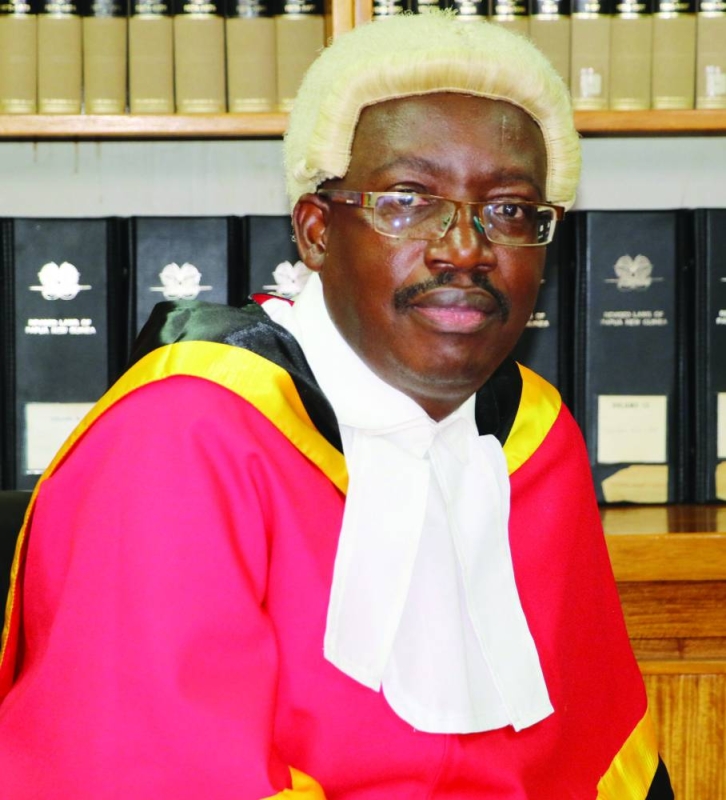
“From the villages of Botswana to the islands of the Pacific, dedication to justice can carry one to the world’s highest judicial forum,”.
With these words, Justice Oagile Key Dingake captured the essence of his nomination to the International Court of Justice (ICJ). His candidacy is not only a personal milestone but a historic moment that bridges Africa and the Pacific, amplifying voices that have too often been overlooked in global legal discourse.
Justice Dingake, Judge of the Supreme and National Court of Papua New Guinea (PNG) have been nominated the Botswana’s candidate for election as Judge for the ICJ for the 2027–2036 term.
Born in Botswana, a nation celebrated as Africa’s “quiet miracle” of democracy, and seasoned through years of judicial service in PNG and across the Pacific, Justice Dingake embodies both the universality of law and the distinct perspectives of diverse regions. His journey reflects a lifelong devotion to justice and a commitment to ensuring that the Pacific’s lived realities—climate change, maritime boundaries, and indigenous rights—are woven into the fabric of international jurisprudence.
Justice Dingake joined the bench in 2002, as Judge of the Labour Court and in 2005 His Honour was appointed to the High Court of Botswana.
His Honour has served the PNG Judiciary for over seven years and is currently the Judge Administrator of the Judicial Review and Appeals.
Justice Dingake whilst interviewed for the nomination stated: “This nomination is not just about Botswana or Africa. It is a call to serve as a jurist of the world. Law, like the desert winds of the Kalahari, knows no borders—it carries fairness across continents.”
The candidacy highlights the Pacific’s growing role in shaping international law. Once seen as remote, the region is now central to global debates on climate change, maritime boundaries, and self‑determination.
Justice Dingake emphasized, by stating the Pacific’s lived realities—its resilience, diversity, and custodianship of the oceans—deserve visibility at the ICJ. My nomination is a bridge between Africa and the Pacific, ensuring that our voices enrich global jurisprudence.”
Papua New Guinea’s home‑grown constitution and unmatched cultural diversity stand as a beacon of constitutional innovation. This nomination underscores PNG’s contribution to comparative constitutionalism and its role in demonstrating that nations far from traditional centres of power can profoundly influence international judicial thought.
“This is a call to dream boldly—to believe that Pacific voices matter in shaping global law.”
The election of ICJ judges is a process of diplomacy and engagement among states. While proud to stand as Botswana’s nominee, Justice Dingake recognizes that service to international law is not confined to one institution.
“Whether at the ICJ or the International Law Commission, I will embrace the opportunity with gratitude. Service to international law is a lifelong vocation,” Justice Dingake concluded.