Village Courts are one of Papua New Guinea’s (PNG) most important community justice institutions. Operating across approximately 1,680 Village Court areas and supported by more than 16,000 Village Court Officials (VCOs), the system forms the foundation of community justice in PNG, resolving disputes, restoring relationships and maintaining peace within communities across the country.
Strengthening the Village Court system requires more than legislation, policy reform and infrastructure. It also depends on the people, partnerships and community leadership that support justice at the local level.
In recent years, the Village Courts and Land Mediation Secretariat (VCLMS), a branch of the Department of Justice and Attorney General, and the Papua New Guinea Centre for Judicial Excellence (PNGCJE) have begun working more closely together to support training and learning that strengthens both Village Courts and the communities they serve.
One area of collaboration has focused on practical training aimed at improving community responses to family and gender-based violence and strengthening survivor-centred support.
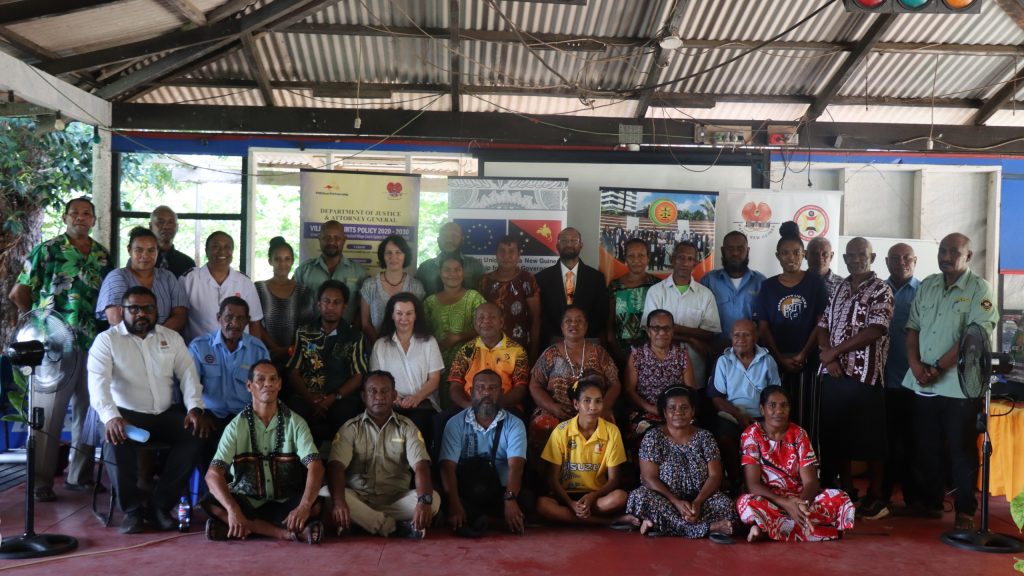
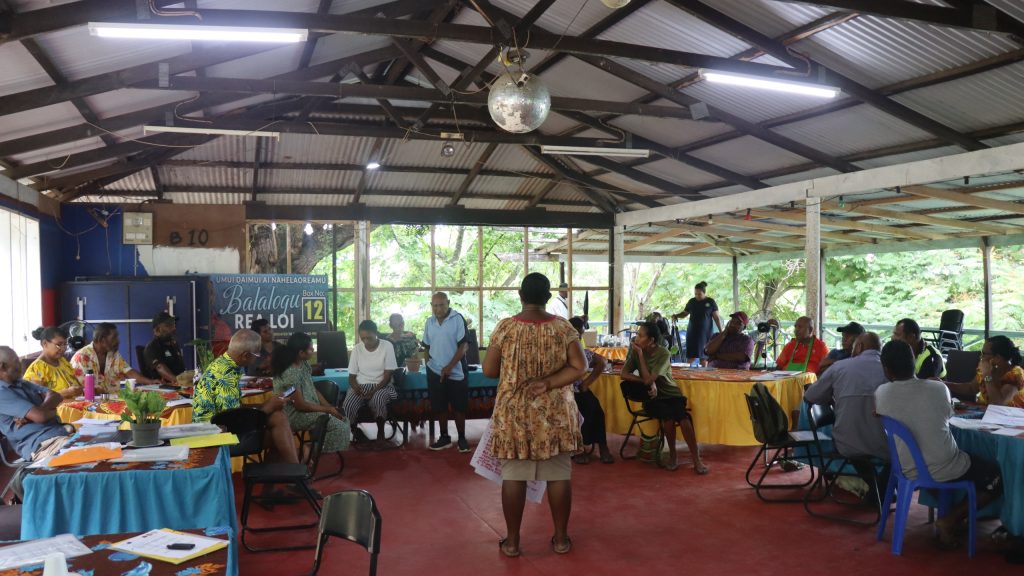
With technical and financial support from the European Union through the EU–PNG Partnership for Good Governance (P4GG) programme, several trainings have been delivered in the Bootless Bay Village Court Area in Central Province to strengthen both justice responses and community support systems. This work has been implemented as a pilot, with lessons intended to inform future training and capacity-building across other Village Court areas in Papua New Guinea.
The training was delivered with specialist partners including the National Gender-Based Violence Secretariat (NGBVS) and the PNG Counsellors Association (PNGCA), who provided experienced trainers and facilitators, with additional financial support provided by PNGCJE.
The training included:
• Community Based Helper Training (CBHT) introducing basic counselling and psychosocial support skills
• Gender-Based Violence Sensitisation Training, strengthening awareness of gender and protection issues
• Survivor Advocate Toolkit (SAT) Training, equipping participants with practical tools to support survivors and guide them through legal and referral processes
Importantly, the training was not limited to VCOs. It brought together church leaders, women’s representatives, youth leaders, persons with disabilities and other community actors, reflecting the Village Court Strategy’s emphasis on civic participation and partnership.
The aim is to strengthen the broader support networks around Village Courts, helping communities respond to violence, provide emotional support and build stronger referral pathways linking Village Courts and communities with health, legal and protection services.
Strengthening Village Courts is therefore not only about improving the work of VCO’s, but also about strengthening the wider community systems that help prevent conflict and support vulnerable people. Early experience from the Bootless Bay Village Court Area indicates that these approaches are helping strengthen local awareness, community support networks and referral pathways for addressing family and gender-based violence.
The delivery of this work has relied on cooperation between several institutions working across different parts of the justice and community support system.
VCLMS has coordinated activities within the Village Court system as part of its mandate to strengthen community justice. Specialist partners, including NGBVS and PNGCA, have contributed professional expertise and facilitators to support the delivery of training.
The P4GG programme has supported this work, while PNGCJE has provided financial support and institutional partnership helping connect the pilot initiative with broader justice-sector learning and future training programs.
An important outcome of this collaboration is the growing role of PNGCJE in supporting ongoing training and institutional learning related to Village Courts.
Building on earlier collaboration in community-level training, elements of this work are now being incorporated into the PNGCJE national training program for 2026.
Embedding these topics within the national training program helps ensure that lessons from this work, particularly around survivor support, community engagement and gender-responsive justice, continue to inform professional development across the justice sector.
The partnership between VCLMS and PNGCJE reflects a broader shift toward strengthening the social infrastructure that supports community justice.
Village Courts do not operate in isolation. Their effectiveness often depends on networks of community leaders, churches, counsellors and local organisations that help resolve disputes, support survivors of violence and rebuild relationships.
Strengthening these connections helps ensure that community justice remains practical, accessible and trusted by the people it serves. It also supports communities themselves to take greater ownership and responsibility for preventing and responding to family and gender-based violence at the local level.