



Justice Carey presents paper on Judiciary’s role in Safeguarding Democracy
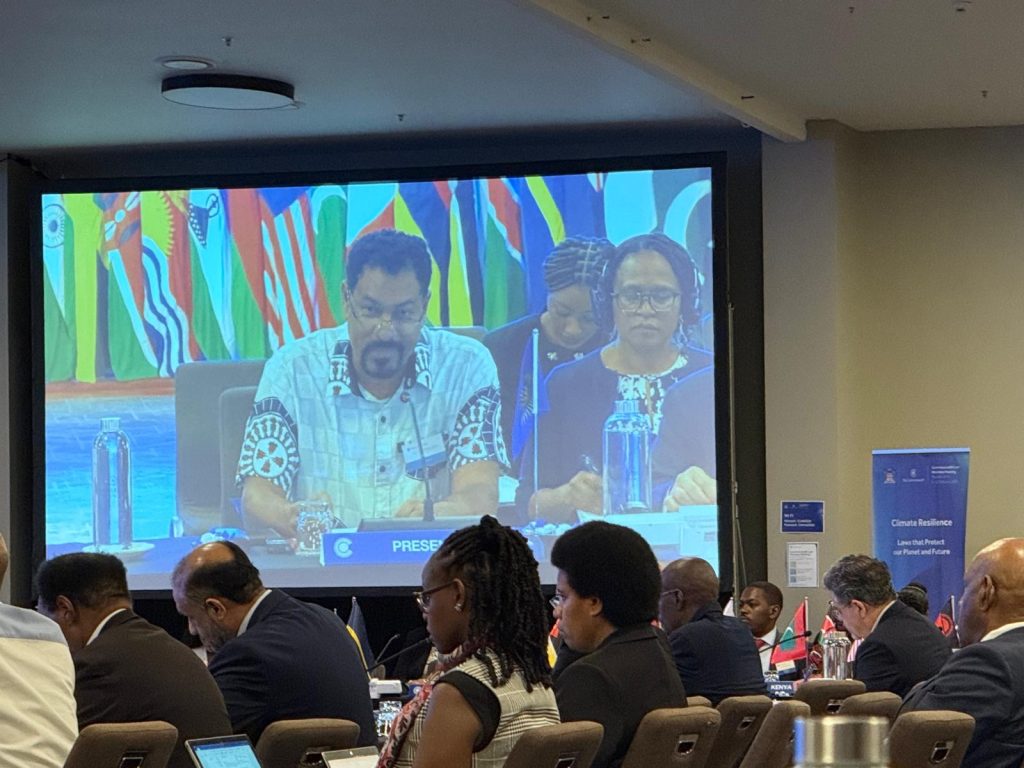
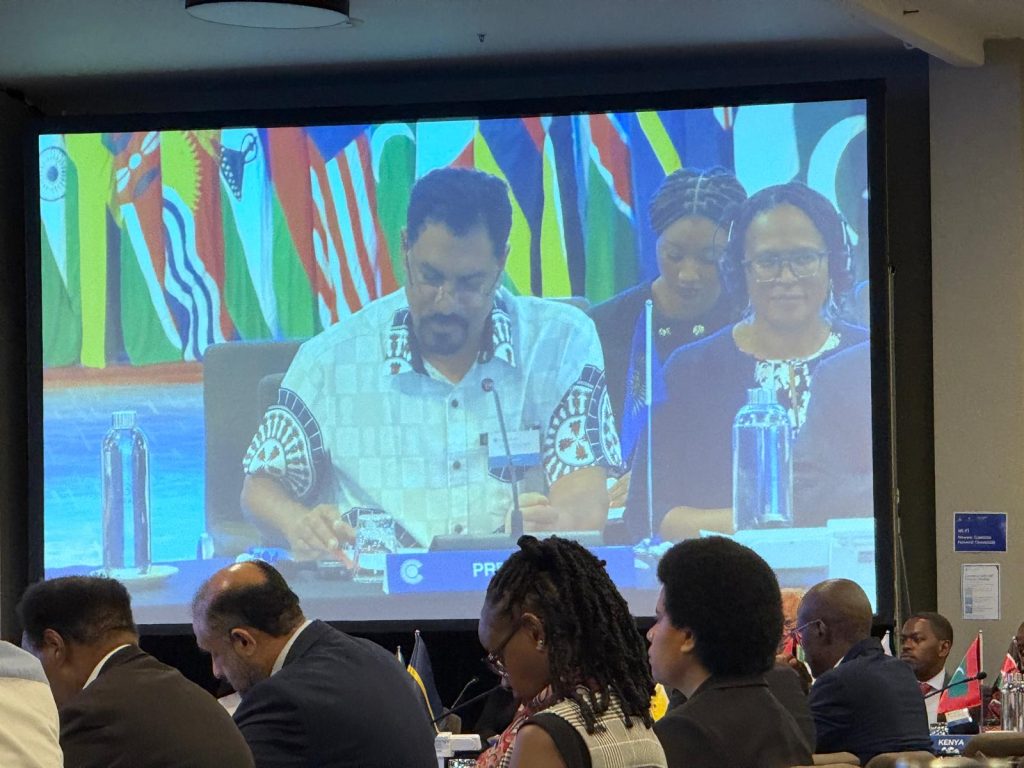
Justice John Carey, Judge Administrator for the Papua New Guinea Centre for Judicial Excellence (PNGCJE), Judge of the Supreme and National Courts of Papua New Guinea, and Adjunct Professor of Law at Griffith University, presented his paper “The Role of the Judiciary in Safeguarding Democracy: A Commonwealth Perspective” to the Commonwealth Law Ministers Meeting in Nadi, Fiji on 9 February, 2026.
The study highlights how courts strengthen democracy not by governing, but by ensuring legality, proportionality, and reasoned decision-making. Anchored in the Latimer House Principles, the Commonwealth Charter, and the Bangalore Principles of Judicial Conduct, Justice Carey emphasized that judicial independence and accountability are complementary forces that reinforce executive legitimacy and public trust.
Key Findings:
· Safeguarding, Not Governing: Courts derive authority from constitutional design, not electoral mandate, stabilizing political systems through equality before the law and reasoned decisions.
· Rule of Law as Infrastructure: Judicial independence, transparent appointments, and adequate resourcing are essential to democratic resilience, reducing conflict and enabling sustainable development.
· Separation of Powers: Comparative cases from South Africa and Samoa show courts enforcing constitutional boundaries while respecting political choice.
· Judicial Independence as a Public Good: Independence protects rights and economic stability, while accountability mechanisms—appeals, ethics regimes, and transparent reporting—ensure legitimacy without intimidation.
· Contemporary Risks: Disinformation, politicized appointments, and under-resourcing threaten judicial credibility. Pacific initiatives, including digital courts and regional cooperation, demonstrate practical solutions.
· Decolonisation and Restraint: Courts advance constitutional decolonisation by rejecting colonial-era practices like ouster clauses and executive supremacy, while exercising restraint to preserve legitimacy.
Case Highlights:
· Bahamas: Courts invalidated statutory ouster clauses and limited parliamentary privilege, reinforcing constitutional supremacy.
· Caribbean (Belize/CCJ): The Attorney General was empowered to sue former ministers for misfeasance, ensuring accountability beyond criminal prosecution.
· South Africa & Samoa: Landmark rulings upheld constitutional checks, demonstrating judicial oversight in politically charged contexts.
Justice Carey concluded: “Independence and accountability are not oppositional—they are the twin pillars of democratic resilience.”
The Commonwealth Law Ministers Meeting, chaired by Fiji, brought together law ministers and senior officials from across the Pacific, Africa, the Caribbean, Europe, and Asia. Discussions focused on strengthening justice systems across member states and reaffirmed that strong legal safeguards protect everyday life—from people’s ability to participate in democracy and earn a fair living, to their right to live in safe and healthy communities.